
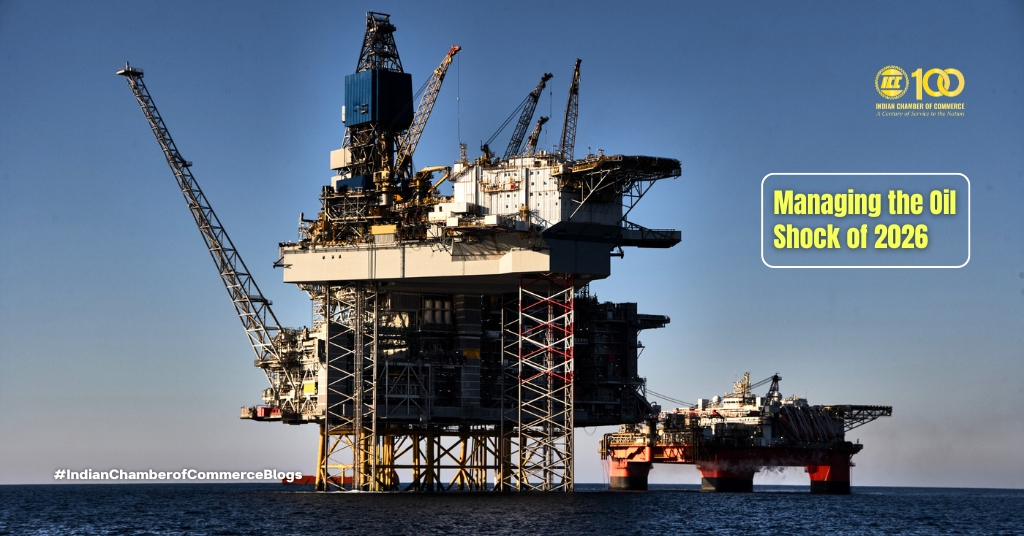
The oil shock of 2026—triggered by escalating geopolitical tensions in West Asia and disruptions around critical supply routes like the Strait of Hormuz—has once again exposed the medium-term structural vulnerabilities of energy-importing economies like India. With crude prices breaching $100 per barrel and volatility becoming the new normal, India faces a complex challenge: managing inflation, safeguarding growth, and accelerating energy transition simultaneously. India imports 80% of its crude oil, making it highly vulnerable to global price swings. The surge in oil prices puts tremendous pressure on India’s external sector, inflation dynamics, fiscal balances and ultimately the growth outlook. Some of the sectors of the economy are bearing the brunt of this: energy, auto, banking, agro (fertiliser), FMCG, and real estate. As energy and fuel costs rise, industries depending on these inputs face higher operational costs and this cuts across other sectors also.
Past oil shocks, particularly the 1973 and 1979 oil crises, were marked by sharp price rises, followed by recessions, inflation and shifts in market dynamics. But can we afford that now? The oil price shock of 2026 is more complicated; there are not only supply disruptions, but also physical damage to infrastructure, such as oil refineries and pipelines, and shipping uncertainties. With peace talks having ended inconclusively, the uncertainty is still there. And there is a high probability of the Gulf War resuming. This makes the crisis more difficult to manage through ordinary pricing or cost control mechanisms, though we are trying a combination of rationing and price control. The increase in oil prices adds about $ 12-15 billion to India’s annual import cost for every $10 rise in crude prices. The immediate result is a higher Current Account Deficit and a weaker currency, which is visible.
The medium-term solutions are (a) increasing energy diplomacy, which is visible as we have gone back to Russian crude, though at a higher cost, (b) building reserves in our refineries, and we are doing so, (c) encouraging alternate sources such as induction cookers, thermal coal (we have adequate stock), etc. The long-term solutions are (a) scaling up on renewable energy-solar, wind, green hydrogen, (b) incentivising the use of electric vehicles and ethanol blended petroleum, and (c) integrating public and private transport- in one of the top economies, people have to park their private vehicles and cover the balance of their journey to work by metro rail.
Share your thoughts on the subject with us!