
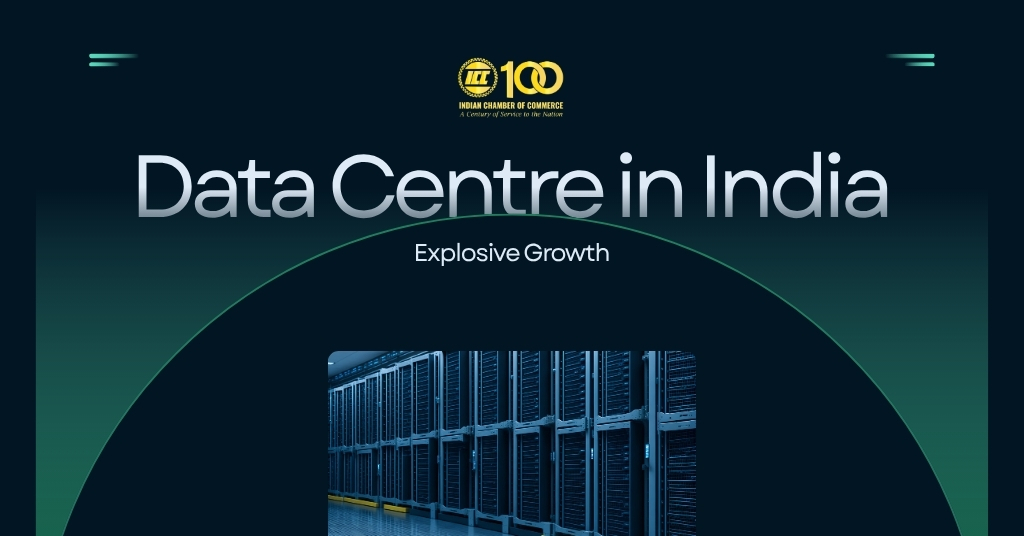
A data centre is a specialised facility that houses computing equipment, including servers, storage systems, networking devices and other infrastructure necessary for processing, storing and managing data. It is essential for supporting online services, applications and cloud computing and serves as the backbone of modern IT infrastructure. Effective management and monitoring are essential for the smooth operation of data centres, ensuring reliability, efficiency and rapid response to issues. India’s data centre sector is experiencing explosive growth, driven by rapid cloud adoption, the rise of artificial intelligence (AI), and government data localisation mandates under the Digital Personal Data Protection Act. While this has many economic benefits, there are some challenges also, which need to be addressed.
Benefits
· Digital Infrastructure & Performance: Local data centres ensure faster and more reliable access to digital services (e-payments, e-governance, and entertainment) for Indian users. It also keeps sensitive citizen and business data within Indian borders in compliance with local laws and protects national security against foreign jurisdiction.
· Economic Growth & Investment: The sector attracts massive Foreign Direct Investment (FDI), encourages real estate development, and creates high-skilled jobs in IT, cybersecurity, and facility management.
· Government Incentives: Recognising their importance, the Indian government has granted data centres “infrastructure status ” and several states—including Maharashtra, Tamil Nadu, Telangana, Uttar Pradesh, Karnataka, and Gujarat—have introduced dedicated data centre policies offering several fiscal and other incentives.
Challenges
· Massive Power Consumption: Data centres require immense, uninterrupted power to run servers and cooling systems. A single large data centre can consume as much electricity as a small city. This places a heavy burden on the national grid and can damage the Environment by leaving a large carbon footprint. In fact, critics opine that FDI in Data Centres is coming to India from abroad to protect their Environments. But this issue can be solved easily if we insist on building the Infrastructure for the transition to Renewable Energy over a period of time.
· Severe Water Depletion: Traditional data centres require millions of litres of water daily for cooling towers. Because hubs are largely clustered in already water-stressed regions like Mumbai and Chennai, this raises severe environmental and community concerns.
Some Suggested Solutions
· We need to explore modular and containerised Data Centre Solutions for quick, scalable and cost-efficient deployments.
· We need to use liquid immersion cooling to enhance energy efficiency, improve heat dissipation and extend equipment lifespan.
· We urgently need to ensure integration of renewable energy resources like solar, wind or hydro power into the Data Centre’s power strategy. One strategy could be linking fiscal incentives to implementation of green energy.
· We need to stay updated on the progress of Quantum Computing, as India has started manufacturing these, and using it in the Data Centre would benefit in many ways.
· We may explore Hybrid Data Centre models that combine Colocation with Hyper Scale Cloud services.
There is more to write, but at this point we would like to stop and take feedback from you. No doubt this Industry is good for Employment, but should it not be the concern of all stakeholders who are connected to the Sector?
Indian Chamber of Commerce