
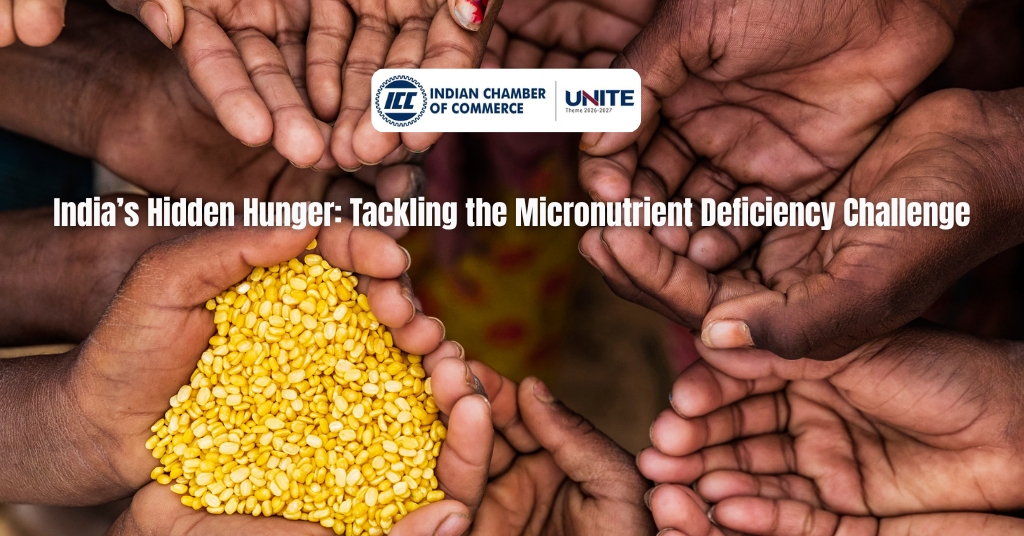
India has made remarkable progress in reducing extreme hunger and improving food availability. Yet, beneath the gains in food security lies a quieter and more complex challenge: micronutrient deficiency. A person may consume enough calories and still suffer from a shortage of Iron, Vitamin B12, Folate, Vitamin D, Iodine, Zinc or Micronutrient vitamin A. This phenomenon—often described as “hidden hunger”—can impair physical growth, cognitive development, immunity, productivity and, ultimately, economic potential. A systematic review of Indian research work estimates substantial levels of deficiency across several key micronutrients, although the researchers admit there are research gaps too, implying we need to work on them.
India’s hidden hunger extends beyond individual nutrient deficiencies to the quality of diets available to vulnerable groups. Non-vulnerable groups, devouring on food courts in shopping malls and exhibiting obesity, also have nutrient deficiencies, but that is a story for another day. But how do we measure these nutrition gaps? They are measured through (a) Anaemia manifestations, the consequences of which extend from fatigue and reduced physical capacity to impaired cognitive and developmental outcomes; (b) Micronutrient Deficiencies (CNNS 2016-18): Vitamin A deficiencies affect 18% of preschool children, 22% of school-age children & 16% of adolescents. Zinc, Vitamin B12 & Folate deficiencies affect up to 32%, 31% and 37% of adolescents, respectively. Vitamin D deficiency spans 70-100% of India. India’s policy framework has evolved from targeting isolated deficiencies towards comprehensive life course approaches. They are (a) Anaemia Mukt Bharat, (b) Food Fortification and Supplementation, and (c) Leveraging Social Protection Platforms
Priorities for India in the Days Ahead
India’s next-generation micronutrient strategy should focus on six priorities to achieve tangible outcomes.
(a) First, measure the problem better-India needs stronger, nationally representative data on individual micronutrient deficiencies. Without reliable measurement, policy cannot be adequately targeted. Researchers have specifically identified the absence of comprehensive national prevalence data as a major limitation. (b) Second, strengthen fortification- fortified rice, iodised salt and other fortified foods can provide cost-effective population-level interventions. But quality control, testing and independent evaluation must remain strong. (c) Third, make nutritious diets affordable-Agricultural policy, food processing, supply chains and social protection should work together to lower the cost of nutrient-dense foods. (d) Fourth, focus on women and children-Adolescent girls, pregnant women, lactating mothers and young children should remain at the centre of micronutrient interventions. (e) Like a corporation, evaluate outcomes—not merely distribution. The success of a nutrition programme should ultimately be judged by whether deficiency falls, anaemia declines, child development improves and productivity increases—not simply by how many tablets, meals or kilograms of fortified rice are distributed.
The sixth priority should be a structural convergence between the Ministry of Women and Child Development, Ministry of Health and Family Welfare, Ministry of Agriculture and Farmers Welfare and the Ministry of Consumer Affairs, Food and Public Distribution. FSSAI is doing a great job on the nutrition content of Foods, through initiatives like the “Eat Right India“ movement, front-of-pack labelling, and strict limits on trans fats, and the other Government Departments need to integrate with it.
To sum up, we need to integrate Food Security with Nutrition Security, so that our Human Capital is healthy, productive and able to conquer the global economy easily. What do you think?
Indian Chamber of Commerce